
-
Home
- Shop by Category
-
Lolita Fashion
- Sweet Lolita
- Gothic Lolita
- Classic Lolita
- Hime Lolita
- Country Lolita
- Wa, Qi & Hanfu Lolita
- Shiro & Kuro Lolita
- Old School Lolita
- Aristocrat Lolita
- Whimsical & Animal Prints
- Strawberry & Fruit Lolita
- Military & Academy Lolita
- Regency & Empire Style
- Specialty & Uniform Styles
- Storybook & Fantasy
- Ouji & Boystyle
- Japanese Substyles
-
Gothic & Punk
- Footwear
- Collections
-
Ouji
Cart
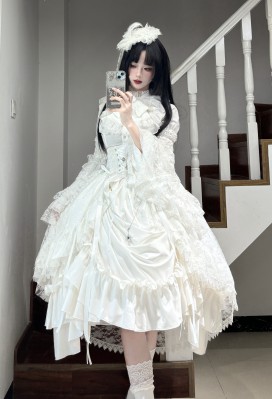
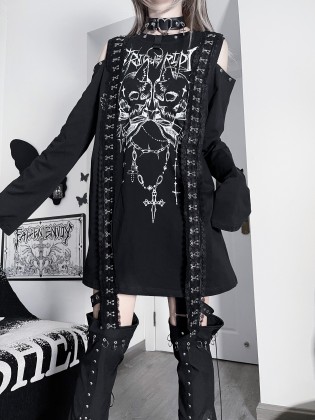
Why Lolita Dress Shoulders Never Fit? Decoding Size Chart Confusion
Undeniably, finding the right size when buying a Lolita dress online can be challenging. Most Chinese Lolita dress brands provide size charts for S, M, L, XL... along with measurements for shoulder width, dress length, sleeve length, waist, and bust. After several attempts, you may find these charts confusing—especially when it comes to shoulder width.
Why Shoulder Width Measurements Are So Confusing ?
Brands Measure Clothing, Not Body

When a size chart lists "shoulder width," it typically refers to the garment’s shoulder seam measurement — not your actual shoulder width. Here’s where confusion arises:
1. Clothing seams are often sloped, so the fabric doesn’t lie flat like a measuring tape.
2. Puff sleeves, drop shoulders, and oversize designs add extra fabric, making the garment wider than the stated measurement.
3. Stretch fabrics can accommodate slightly broader shoulders, while stiff materials (like structured blazers) offer no give.
Eg. If a brand lists a shoulder width of 38 cm, that’s the flat measurement of the garment when laid out — not how it will fit on your body.
Different Brands, Different Standards
1. Asian vs. Western sizing: Asian brands often design for narrower shoulders, while European/American brands cater to broader frames.
2. Lolita fashion vs. casual wear: A Lolita dress may have a tighter shoulder cut than a relaxed-fit top, even if both are labeled "Medium."
Asymmetrical Shoulders
Most people have slightly uneven shoulders (one may be higher or broader than the other). If a garment has no stretch, a 1 cm difference can make it feel too tight on one side.
How to Find Dress With Perfect Shoulder Fit
Step 1: Measure Your Shoulder Width Correctly

Step 2: Compare with the Brand’s Size Chart
Never assume "Size" is universal across brands. Check if the brand measures flat garment width or body width (some European brands list body measurements).
For drop-shoulder or puff-sleeve garments, consider sizing down.
Step 3: Learn from Past Purchases
Keep notes on brands that run small or large in the shoulders.
Examine previously purchased dresses to identify shoulder designs that fit well.
Pro Tips for Shoulder-Friendly Shopping
1.Prioritize shoulder-friendly designs: Raglan sleeves (no shoulder seam), Stretch fabrics (spandex, elastane), Adjustable straps (ties, buttons)
2.Size up when in doubt — Shoulders are harder to alter than waistlines.
Avoid non-stretch fabrics if you have broad shoulders — they offer less flexibility.
- SHOPPING ASSISTANT
- Measurement Guide
- Shopping Guide
- Shoes Tips
- Wig Care
- Tailor-Made Services
- How to Wear
- Buyer Gallery
- Brand Gallery
- CUSTOMER CARE
- Shipment Info & Rates
- Order Process
- Payment Methods
- Return & Exchange Policy
- Register & Login
- Reviews
- Affiliate
- Wholesale & Group Order
- ABOUT & POLICIES
- About Us
- Contact Us
- Blog
- FAQs
- Privacy & Terms
- Links
- Sitemap
- Intellectual Property Rights
- Join our community
